506(c)

Simple illustration showing two capital raising paths—relationship-based fundraising under Rule 506(b) and public marketing under Rule 506(c)—both beginning with a business strategy.

Most Sponsors Ask the Wrong Question About Rule 506(b) and Rule 506(c)

Most Sponsors Ask the Wrong Question About Rule 506(b) and Rule 506(c) One of the most common conversations surrounding Regulation D offerings starts with what appears to be a simple question. “Should I use Reg D Rule 506(b) or Rule 506(c)?” At first glance, it seems like the logical place to begin. After all, both

Most Sponsors Ask the Wrong Question About Rule 506(b) and Rule 506(c) Read More »

Why Rule 506(b) Continues to Dominate Real Estate Syndications

If you spend enough time in the real estate industry, you’ll eventually hear someone say that Rule 506(c) or Reg CF is the future of capital raising. After all, it allows sponsors to publicly market their offerings through podcasts, YouTube, webinars, social media, conferences, paid advertising, and other forms of general solicitation. They’re not wrong.

Why Rule 506(b) Continues to Dominate Real Estate Syndications Read More »

How Sponsors Are Combining 506(b) Relationships with 506(c) Marketing

Why Side-by-Side Offerings Are Becoming More Common One of the most common assumptions in the capital raising world is that a sponsor eventually has to choose a fundraising lane and stay in it. If you want to raise money from existing relationships, you use Rule 506(b). If you want to generally solicit through podcasts, social

How Sponsors Are Combining 506(b) Relationships with 506(c) Marketing Read More »

Illustration showing a Regulation Crowdfunding offering and a Rule 506(c) offering operating side-by-side, allowing retail investors and accredited investors to support the same company through separate fundraising structures.

How Startups Are Combining Reg CF Marketing with 506(c) Capital

Why More Founders and Sponsors Are Exploring Side-by-Side Offerings   Most founders begin the fundraising process with a fairly simple objective: raise enough capital to execute the business plan. Whether the goal is launching a startup, acquiring an asset or business, expanding a franchise, developing a real estate project, or purchasing an apartment complex, the

How Startups Are Combining Reg CF Marketing with 506(c) Capital Read More »

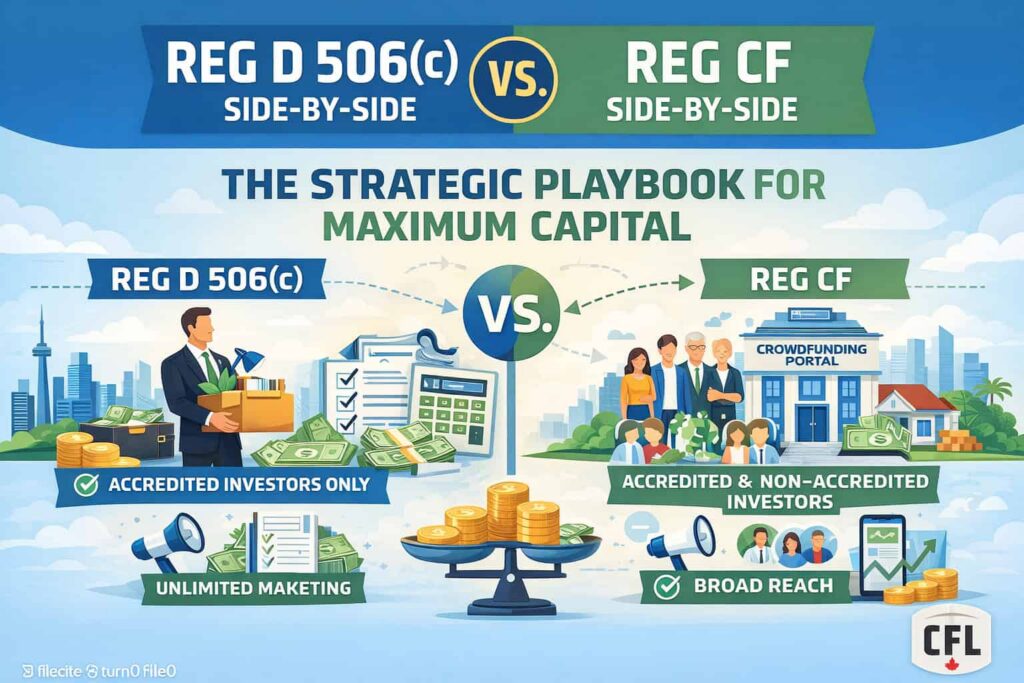
Reg D 506(c) vs. Reg CF Side-by-Side: The Strategic Playbook for Maximum Capital

Reg D 506(c) vs. Reg CF Side-by-Side: The Strategic Playbook for Maximum Capital If you’re raising capital for real estate today, you’re likely feeling the squeeze of a crowded market. Many syndicators are still stuck in the “Checkers” mindset, relying exclusively on Rule 506(b) offerings because that’s how it’s always been done. In fact, it’s

Reg D 506(c) vs. Reg CF Side-by-Side: The Strategic Playbook for Maximum Capital Read More »

"Open Mic" Liability: Compliant Webinars

The “Open Mic” Liability: Compliant Webinars and Live Streams for Capital Raising

The free steak dinner seminar marketing plans are dead. Today, capital is raised on Zoom, Google Meet, and YouTube Live. For syndicators and issuers, webinars are the ultimate conversion tool. They allow you to look investors in the eye (digitally), walk through the pitch deck, and answer objections in real-time. But the very feature that

The “Open Mic” Liability: Compliant Webinars and Live Streams for Capital Raising Read More »

The Rise of the “Issuer-Influencer”: Navigating Social Media Compliance in Capital Raising

Ten years ago, raising capital was a private affair, primarily done through friend ‘n family under Reg D 506(b) or often on golf courses. Today, it happens through LinkedIn, DMs through our social media, Instagram Stories, and Facebook boosted posts. We have entered the era of the “Issuer-Influencer.” Syndicators, founders, and fund managers are no

The Rise of the “Issuer-Influencer”: Navigating Social Media Compliance in Capital Raising Read More »

The 2026 SEC Playbook: 3 Things Syndicators Must Watch

The wait is over. On November 17, 2025, the SEC’s Division of Examinations released its 2026 Examination Priorities Report. For real estate syndicators and private fund managers, the report signals a distinct shift in tone under the new Atkins administration. While the era of “gotcha” enforcement for minor foot-faults may be waning, the focus on

The 2026 SEC Playbook: 3 Things Syndicators Must Watch Read More »

Why Compliance Builds Trust — Not Barriers

There’s a common misconception in real estate syndication: compliance is just expensive red tape that slows you down and scares investors away with legal jargon. The reality? Proper compliance is your strongest competitive advantage in a crowded market. When you’re raising capital for multifamily developments, fix-and-flip funds, or commercial real estate projects, you’re not just

Why Compliance Builds Trust — Not Barriers Read More »

A professional team meeting in a modern office setting, illustrating the importance of compliance and communication in capital raising. The image conveys a credible, trustworthy atmosphere—symbolizing the disciplined approach needed to avoid legal pitfalls and build investor confidence.

The Hidden Traps of Raising Capital (and How to Avoid Them)

Most first-time capital raisers think compliance begins and ends with hiring an attorney and filing the right paperwork. Once the private placement memorandum is drafted and the subscription agreements are signed, they breathe a sigh of relief—believing the legal work is complete. But in reality, that’s only the beginning. The real danger lies in what

The Hidden Traps of Raising Capital (and How to Avoid Them) Read More »

Scroll to Top